


Australian Bedding Terminology: The Quick Answer
In Australia, bedding terminology describes the different layers, fabrics and accessories used to make a bed. Some names, like doona and quilt, are used interchangeably, while others describe different products.
Here's what you need to know:
-
Doona or quilt: A filled bedding insert, usually placed inside a removable quilt cover.
-
Duvet: The term commonly used in the UK for what Australians call a doona.
-
Comforter: A filled bedding layer with its outer fabric already attached, often used without a separate cover.
-
Coverlet: A lighter bedding layer that can be used on its own or over other bedding.
-
Bedspread: A decorative top layer, often designed to hang further down the sides of the bed.
-
Fitted sheet: The elasticated sheet that fits around your mattress.
-
Flat sheet: A rectangular sheet that sits between you and your top bedding.
-
European pillowcase: A square pillowcase, commonly measuring 65 × 65 cm in Australia.
The important thing to remember is that bedding names and measurements can vary between Australian and international retailers. Always check the product description, dimensions and fabric before buying.
Ever gone shopping for new bedding and found yourself wondering what half the names actually mean?
You're not alone.
Between doonas, quilts, comforters, coverlets and bedspreads, there are quite a few terms to get your head around. And just when you think you've worked them out, you come across an overseas website calling something completely different.
The good news? Bedding doesn't need to be complicated.
At Morgan & Reid, we believe choosing bedding should be easy. So we've put together this guide to explain the most common bedding terms you'll come across in Australia, what each one means and how to work out which is right for your bed.
Bedding Terminology: A Quick Guide
Before we get into the details, here's a simple breakdown of the bedding terms you're most likely to see when shopping in Australia.
| Bedding term | What it means |
|---|---|
| Doona | A filled bedding insert, usually used inside a removable cover |
| Quilt | Another common Australian name for a doona, although it can also describe traditional stitched bedding |
| Quilt cover | A removable fabric cover that goes around your doona |
| Duvet | The UK and international term commonly used for a doona |
| Comforter | A filled bedding layer with its outer fabric already attached, often used without a separate cover |
| Coverlet | A lighter bedding layer used on its own or over other bedding |
| Bedspread | A decorative top layer designed to cover much of the bed |
| Blanket | An additional layer for warmth, usually woven, knitted or made from fleece |
| Throw | A smaller blanket used for extra warmth or decoration |
| Fitted sheet | A sheet with elasticated edges that fits around your mattress |
| Flat sheet | A rectangular sheet that sits between you and your top bedding |
| European pillowcase | A square pillowcase, commonly 65 × 65 cm in Australia |
One important thing to remember is that bedding names aren't always used consistently. The same word can describe different products depending on the country, retailer or style of bedding.
What's the Difference Between a Doona, Quilt and Duvet?
In Australia, the words doona and quilt are often used to describe the same thing.
They're the filled bedding insert you place inside a quilt cover to keep you warm at night.
Depending on the product, the filling might be wool, feathers, down, cotton or synthetic fibres. Different fillings and constructions affect how warm, heavy and fluffy the quilt feels.
The word duvet is more commonly used in the United Kingdom and New Zealand, but it generally refers to the same type of bedding.
So if you're shopping on an overseas website and see the word duvet, you're usually looking at what Australians would call a doona or quilt.
What is a quilt cover?
A quilt cover, sometimes called a doona cover or duvet cover, is the removable fabric cover that goes around your quilt.
It usually closes with buttons, a zip or ties and can be removed for washing.
Quilt covers let you change the colour or pattern of your bedding without replacing the filled insert.
The downside is that putting a doona back inside its cover can be a bit of a hassle, particularly with larger sizes.
That's one of the reasons coverless bedding has become an alternative worth considering.
What is a Comforter?
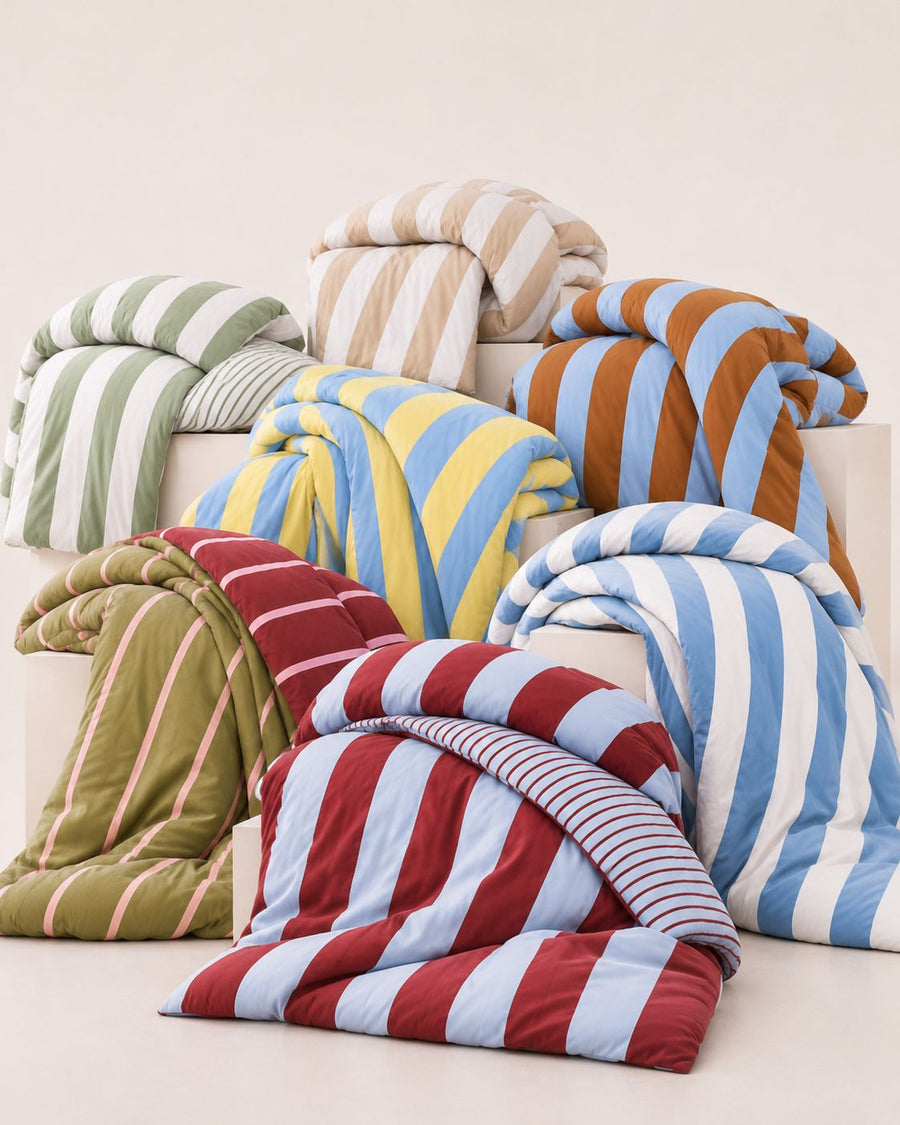
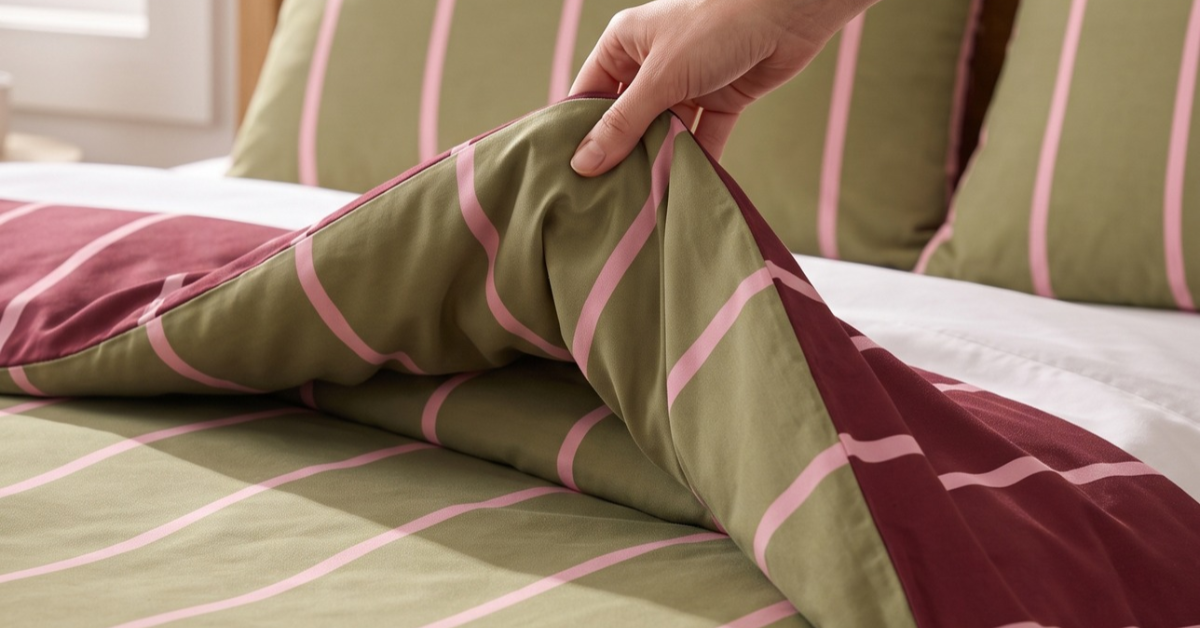
A comforter is a filled bedding layer with the outer fabric and filling sewn together. Unlike a traditional doona, a coverless comforter doesn't need a separate quilt cover. The fabric you see on the outside is part of the comforter itself. You simply place it over your sheets, and your bed is made.
Comforters come in different fabrics, weights and warmth levels, so they're not just for winter. Some are designed to feel light and breathable during warmer weather, while others use thicker fabrics and fillings for colder nights.At Morgan & Reid, our comforters are designed to make everyday bedding easier, with coverless options for different seasons and sleeping preferences.
If you've never tried one before, read our Australian guide to comforters for a closer look at how they work.
Read More: What is a Comforter? An Australian Guide to Coverless Bedding?

Is a comforter the same as a doona?
Not exactly.
A traditional Australian doona is generally a filled insert that needs a separate cover. A coverless comforter combines the filling and outer fabric into one finished piece.
Both can be used as the main bedding layer, but they differ in how they're constructed and cared for.It's also worth knowing that the word comforter can mean different things overseas. In the United States, it's often used for a filled top layer that Australians might otherwise compare to a quilt or doona.
What is a Coverlet?
A coverlet is a lighter bedding layer that sits over your sheets or on top of other bedding. It's generally thinner and less bulky than a winter doona or thick comforter, making it a popular choice for warmer weather.
Some coverlets are lightly quilted, while others are made from woven or textured fabrics.You can use a coverlet as your main bedding layer during summer, or place one over your existing bedding for an extra layer of warmth and colour.
At Morgan & Reid, our coverlets are designed for easy layering and everyday comfort.They're particularly useful when you want something on the bed but don't need the warmth of a thicker comforter.
For more information, read our guide on why a coverlet is a useful addition to your spring bedding.

What is a Bedspread?
A bedspread is a decorative bedding layer designed to cover a large portion of the bed. Traditionally, bedspreads are generously sized so they hang over the sides of the mattress and sometimes cover the pillows as well. They can be quilted, woven or made from lightweight fabrics.
The main difference between a bedspread and a coverlet is often the size and how they're intended to sit on the bed. A coverlet usually provides a neater, shorter finish, while a traditional bedspread offers more coverage.
Read More: The Modern Day Bedspread is Known As a Coverlet
Understanding Bed Sheets: Fitted Sheets, Flat Sheets and Sheet Sets
Sheets might seem straightforward, but there are a few important differences worth understanding before buying a new set.
From fitted sheets and flat sheets to deep-wall and mega-wall options, knowing what these terms mean can help you find sheets that fit your mattress properly and feel comfortable throughout the night.
What is a fitted sheet?
A fitted sheet is the sheet that goes directly over your mattress. It has elastic around the edges or corners to help hold it in place, so it stays tucked around your mattress while you sleep. Fitted sheets come in different sizes and depths, and it's important to check both measurements before buying.
Read More: What is a Fitted Sheets and fidning the correct size?

What is a flat sheet?
A flat sheet, sometimes called a top sheet, is a large rectangular sheet without elastic. It usually sits between you and your doona, comforter or blanket. Some Australians love sleeping with a flat sheet because it gives them another lightweight layer, particularly during warmer weather. Others prefer to skip it and sleep directly underneath their comforter or doona.There's no right or wrong way to use one. It really comes down to how you like to sleep. Flat sheets can also help keep your top bedding cleaner by creating a barrier between your body and your doona or comforter.
What is a sheet set?
A sheet set is a collection of matching bedding pieces designed to make fitting out your bed easier.In Australia, a typical sheet set includes:
-
One fitted sheet
-
One flat sheet
-
One or two pillowcases, depending on the size
However, not every retailer includes the same pieces, so it's worth checking what's included before purchasing.At Morgan & Reid, our sheet sets are designed to give you the everyday essentials in matching colours and fabrics.

What are deep-wall and mega-wall fitted sheets?
If you've ever had a fitted sheet that keeps slipping off the corners of your mattress, the depth of the sheet could be the problem.
The wall depth refers to how deep the fitted sheet is designed to fit around your mattress.
Standard fitted sheets generally suit lower-profile mattresses, while deep-wall and mega-wall sheets are designed for thicker mattresses.These terms aren't standardised across Australian retailers, so it's always best to check the actual measurements.
For example, Morgan & Reid's Bamboo Egyptian Cotton Sheet Sets are available with a 40 cm fitted sheet wall, while our Mega Wall option has a 50 cm depth.
When measuring your mattress, remember to include any mattress topper you regularly use.

Understanding Pillowcases and Pillow Shams
Not all pillowcases are the same size, and some are designed more for styling than sleeping.
Here's what the most common terms mean.
What is a standard pillowcase?
A standard pillowcase is the everyday rectangular pillowcase most Australians use for sleeping. A common Australian standard pillowcase measurement is approximately 48 × 73 cm, although measurements vary slightly between brands.They're available in different fabrics, including cotton, bamboo blends, microfibre and fleece.

What is a European pillowcase?
A European pillowcase is a larger, square pillowcase designed to fit a European pillow. In Australia, the most common size is 65 × 65 cm. European pillows are often placed behind standard sleeping pillows to add height and support when sitting up in bed.
They can also help create that full, layered bed look you often see in professionally styled bedrooms.Unlike standard pillowcases, European pillowcases are often sold separately or as part of decorative bedding collections.

Bedding Fabric Terminology Explained
Once you've worked out which type of bedding you need, the next thing to consider is the fabric. And this is where things can get a little confusing.Cotton percale, sateen, bamboo, microfibre and fleece all have different characteristics, and the fabric can make a noticeable difference to how your bedding feels against your skin.
What is cotton percale?
Cotton percale is a type of woven fabric, not a different variety of cotton. It's made using a plain weave, where the threads cross over and under each other in a simple pattern. This creates a smooth, matte fabric with that familiar fresh, crisp cotton feeling. Cotton percale is often a popular choice for warmer weather because its woven structure can feel light and breathable. It's also a good option if you prefer sheets that don't have a silky or slippery finish.
Our Morgan & Reid Cotton Percale Sheet Sets are made for people who love that classic fresh-sheet feeling, with colours inspired by our Gingham Comforter collection.
What is cotton sateen?
Cotton sateen is another type of cotton weave, but it feels quite different from percale. Sateen uses a weave structure that allows more thread to sit across the surface of the fabric. This gives it a smoother, softer feel and often a subtle sheen.If percale is known for feeling crisp and matte, sateen is generally known for feeling silky and smooth. Neither is automatically better. It depends on the feeling you prefer when you climb into bed.
What are bamboo sheets?
Bamboo sheets are commonly made using regenerated cellulose fibres derived from bamboo. You'll often see these described as bamboo viscose, bamboo rayon or bamboo lyocell, depending on how the fibres are produced. These fabrics are generally known for their smooth, soft feel and fluid drape.Some bamboo sheets are blended with other fibres, such as cotton, to create a different texture and feel.
For example, our Bamboo Egyptian Cotton Sheet Sets combine 60% bamboo-derived fibre with 40% Egyptian cotton.When shopping for bamboo bedding, it's worth checking the full fibre composition rather than relying on the word bamboo alone.

What is faux fur bedding?
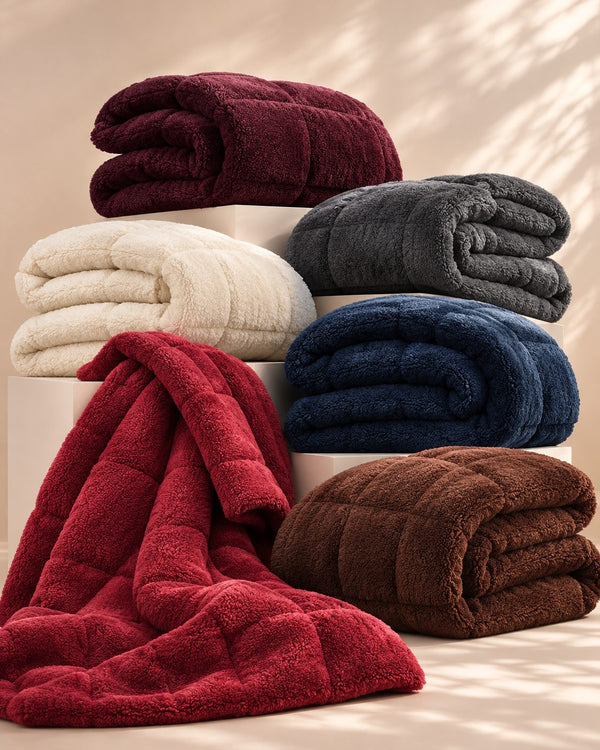
Faux fur is a synthetic fabric designed to recreate the soft, fluffy appearance and feel of animal fur without using real fur. It's commonly made from polyester or other synthetic fibres. The texture, length and density of the pile can vary considerably between products.
Some faux fur fabrics have a shorter, velvety surface, while others have longer, fluffier fibres.
Faux fur is often used in warmer bedding, including winter comforters and throws, because the plush surface feels soft and insulating. As with any bedding fabric, the overall warmth also depends on the filling, backing fabric and construction.

Understanding Australian Bedding Sizes
If you've ever bought bedding online and found that it doesn't quite fit your bed, you're not alone.
One of the most common causes of confusion is that bedding sizes aren't always the same between countries, and even Australian brands can have slightly different measurements.
A queen bed in Australia might be very close in size to a queen bed in America, but the same isn't true for every mattress size.
And just because something is labelled king size doesn't automatically mean it will give you the coverage you're expecting.
Before buying new bedding, it helps to understand the difference between your mattress size and the size of the bedding that goes on top.
What are the standard bed sizes in Australia?
Australian mattresses come in several common sizes, from single beds through to super king.
Here's a quick guide to the approximate measurements.
| Australian bed size | Mattress dimensions |
|---|---|
| Single | 92 × 190 cm |
| Long Single | 92 × 203 cm |
| King Single | 107 × 203 cm |
| Double | 138 × 190 cm |
| Queen | 153 × 203 cm |
| King | 183 × 203 cm |
| Super King | 203 × 203 cm |
Measurements are approximate. Always check your mattress dimensions, as sizes can vary slightly between manufacturers.
Most Australians are familiar with single, double, queen and king beds, but king single and super king sizes can sometimes cause confusion.
A king single mattress is wider and longer than a standard single, making it a popular choice for teenagers, taller sleepers and guest bedrooms.
A super king mattress is larger again, offering additional width for couples who prefer more sleeping space.But here's where it gets interesting: the size of your mattress doesn't necessarily determine the exact size of your comforter or doona.
Read More: The Ultimate Guide to Super King Bedding in Australia
What Size Comforter Do I Need?
A comforter needs to be wider than your mattress so it can hang comfortably over the sides of your bed.This extra fabric is called the drop. How much drop you prefer comes down to personal choice. Some people like a neat, shorter finish, while others prefer their comforter to hang further down the sides of the mattress.
At Morgan & Reid, our standard comforter sizes are:
| Comforter size | Dimensions | Recommended bed |
|---|---|---|
| Single | 160 × 220 cm | Single |
| Double | 210 × 220 cm | Double or King Single |
| Queen | 240 × 220 cm | Queen |
| King | 260 × 220 cm | King |
| Super King | 280 × 240 cm | Super King |
Our Cooling Comforters have a wider Single size of 180 × 220 cm. Always check individual product measurements.
Read More: Comforter Size Guide
Should I size up my comforter?
You certainly can. In fact, choosing a comforter one size larger than your mattress can be a good idea if you prefer more coverage.
For example, a Morgan & Reid Queen Comforter measures 240 cm wide. On a standard Australian queen mattress measuring approximately 152 cm wide, that gives you around 44 cm of fabric hanging down each side.
If you choose a King Comforter instead, the width increases to 260 cm, giving you around 54 cm of fabric on each side. That's an extra 10 cm of coverage on each side, which can make a noticeable difference to how your bed looks and feels.A larger comforter can also be helpful if you share your bed with someone who has a habit of pulling all the bedding to their side during the night.
However, bigger isn't automatically better. Consider the height of your bed, how much fabric you want hanging over the sides and whether the larger comforter will be practical to wash.
What size comforter fits a King Single bed?
If you've been shopping for bedding for a King Single bed, you might have noticed that it's surprisingly difficult to find a comforter or quilt labelled King Single. There's a simple reason for this. In Australia, Double size quilts and comforters are commonly used for King Single beds, so many bedding brands don't make a separate King Single option.
A King Single mattress is longer and wider than a standard Single mattress, which means Single bedding can be a little too narrow, especially if you like your comforter to hang over the sides.nThat's why we recommend choosing a Double Comforter for a King Single bed.
To give you an idea of how it fits, a standard Australian King Single mattress measures approximately 107 × 203 cm, while a Morgan & Reid Double Comforter measures 210 × 220 cm.This gives you around 51.5 cm of fabric hanging over each side of the mattress, providing plenty of coverage and a comfortable fit.
You can use a Single Comforter on a King Single bed, but it won't hang as far over the sides and may feel a little small, particularly for someone who likes to snuggle up under their bedding.
So, if you're wondering why you can't find many King Single quilts or comforters in Australia, don't worry. A Double is generally the size you're looking for.
For a more personalised recommendation, visit our Morgan & Reid Comforter Size Guide, where you can compare sizes and see how much coverage each comforter provides.
Australian vs US Bedding Sizes: What's the Difference?
If you've ever shopped for bedding from an American website, you've probably noticed a few unfamiliar names.Instead of Single, King Single and Double, American retailers commonly use terms like Twin, Twin XL and Full.But the differences go beyond the names.American mattress measurements aren't always the same as Australian measurements, which means bedding purchased overseas may not fit an Australian mattress the way you expect.
What is a Twin bed?
A Twin bed is the American equivalent of an Australian Single bed. Both are designed for one sleeper, but the American Twin mattress is slightly wider. You'll also come across Twin XL, which is longer than a regular Twin and is often used in American university accommodation.
What is a California King bed?
A California King is a mattress size commonly found in the United States. It measures approximately 183 × 213 cm, making it narrower but longer than a standard American King. It's designed to offer additional length rather than extra width. A California King is not the same as an Australian Super King, which measures approximately 203 × 203 cm. If you have an Australian Super King mattress, don't assume that bedding labelled California King will fit correctly.
Doona vs Duvet vs Comforter: Australian and International Names
The terminology can get even more confusing when you're shopping across Australian, British and American bedding websites. That's because different countries sometimes use different names for similar products.
Here's how the most common terms compare.
| Australian term | UK term | US term |
|---|---|---|
| Doona or quilt | Duvet | Duvet insert or comforter |
| Quilt cover or doona cover | Duvet cover | Duvet cover |
| Fitted sheet | Fitted sheet | Fitted sheet |
| Flat sheet | Flat sheet | Flat sheet or top sheet |
| Double bed | Double bed | Full bed |
| Single bed | Single bed | Twin bed |
These are common naming conventions rather than exact product equivalents.
Is a doona the same as a duvet?
Generally, yes. In Australia, a doona is usually a filled bedding insert used inside a removable quilt cover.
In the United Kingdom, the same type of product is commonly called a duvet. In America, you might see it described as a duvet insert.The filling and construction can vary, but the basic idea is similar.
What is the Difference Between a King and Super King Comforter?
The biggest difference between a king and super king comforter is the amount of fabric you have to cover your bed.
A larger comforter gives you more room to move and a longer drape over the mattress.At Morgan & Reid, our King Comforter measures 260 × 220 cm, while our Super King Comforter measures 280 × 240 cm. That means the Super King is both 20 cm wider and 20 cm longer.
If you have an Australian king mattress, you can use either size. A King Comforter gives you a drop of approximately 38.5 cm on each side. A Super King Comforter increases that to approximately 48.5 cm on each side. This extra coverage can be particularly useful if you have a deeper mattress or prefer a fuller, more generous look. If you have an Australian Super King mattress, we'd generally recommend choosing the Super King Comforter.
How to Choose the Right Bedding Size for Your Bed
Buying new bedding should be simple, but not all bedding sizes are the same. Even if you know you have a queen or king bed, it's worth checking a few measurements before buying your new sheets, doona or comforter.
Here's what to look for.
1. Check Your Mattress Size
Start by checking the width and length of your mattress.
The width is the measurement from one side of the bed to the other, while the length is from the head of the bed down to the foot. These measurements will help you choose the right fitted sheet and work out which doona or comforter size will suit your bed.
For example, a standard Australian queen mattress measures approximately 153 cm wide and 203 cm long.
Your fitted sheet needs to match these measurements fairly closely, but your comforter should be wider than your mattress so it can hang comfortably over the sides.
2. Don't Forget About Mattress Depth
Have you ever bought a fitted sheet that seems to fit your bed, only to find the corners keep popping off during the night?
Your mattress depth could be the reason.
Mattress depth is simply how thick your mattress is, measured from the top to the bottom. Some mattresses are thicker than others, especially if you have a pillow-top mattress or use an additional mattress topper.
When buying fitted sheets, look for the wall depth. This tells you how deep the sheet is designed to fit around your mattress.
For example, Morgan & Reid's Sheets are available with a 40 cm wall or a deeper 50 cm Mega Wall option.
If you have a thicker mattress, choosing a deeper fitted sheet may help it stay securely in place.

3. Think About How Much Bedding You Want Hanging Over the Sides
Here's something many people don't realise: you don't always have to buy the same size comforter as your mattress. It depends on how you like your bedding to look and feel.Some people prefer a neat finish, with their comforter hanging just over the sides of the mattress. Others love a fuller look, with plenty of fabric draping down the sides.
For example, if you have a queen bed, you might prefer a king comforter for that extra coverage.
Choosing a larger comforter can also be helpful if you share your bed with someone who always seems to end up with more of the bedding!
So, What Size Bedding Should You Buy?
For fitted sheets, choose the size that matches your mattress and make sure the wall depth is suitable.
For doonas and comforters, think about how much coverage you prefer. Choosing the same size as your mattress is a good starting point, but going up a size can give you a little more room and a fuller look.
And remember, the size on the label is only a guide. Always check the actual measurements, particularly when buying from different brands or overseas retailers.The right bedding should fit your bed comfortably, suit the way you sleep and be easy for you to look after.
How Do You Put All the Different Bedding Layers Together?
Now that you know what the different bedding terms mean, you might be wondering how they all work together. The good news is that you don't need every type of bedding on your bed. It really comes down to the weather, how warm you like to sleep and how much time you want to spend making your bed.
For a simple summer bed
During warmer months, you might only need a fitted sheet, pillows and a lightweight comforter or coverlet.Some people prefer adding a flat sheet, particularly on nights when they want a little coverage without sleeping under a thicker layer. Cotton percale sheets can be a preffered option if you prefer a fresh, crisp feel against your skin.
For a cosy winter bed
When the temperature drops, you might prefer a warmer snuggle Fleece comforter or doona, along with sheets that feel comfortable during colder nights. Some people also add a blanket or coverlet for extra warmth. If you prefer soft, plush fabrics, fleece bedding can be a good option during winter.You don't necessarily need lots of layers. Sometimes one warmer comforter is all you need.

For a bed that's easy to make
If you don't love changing doona covers, a coverless comforter can make your bedding routine simpler.You can make your bed with a fitted sheet, pillows and your comforter, without having to put a doona inside a separate cover.
This is the idea behind Morgan & Reid's coverless comforters. Whether you prefer lightweight summer bedding or something warmer for winter, it's about finding the combination that works for the way you sleep.
And remember, there's no rule saying your bed needs to look a certain way. The best bedding setup is one that feels comfortable and is easy for you to look after.
You can explore the different options in our Morgan & Reid Comforter Size Guide.

What Do the Numbers and Terms on Bedding Labels Mean?
When shopping for bedding, you'll often come across terms like GSM, thread count and fill weight. They might sound technical, but they're simply different ways of describing how bedding is made.And understanding them can help you choose something that feels right for you.
What does GSM mean in bedding?
GSM stands for grams per square metre. It's a measurement of how much a square metre of fabric or material weighs. You'll often see GSM listed on fleece bedding, comforters, blankets and towels. For example, a 400 GSM fabric weighs more per square metre than a 200 GSM fabric. But here's something worth knowing: a higher GSM doesn't automatically mean better quality or warmer bedding. The type of fabric, its texture, thickness and construction all make a difference. When comparing comforters, it's also important to check whether the GSM refers to the outer fabric, filling or another layer.
What does thread count mean?
Thread count refers to the number of threads woven into a square inch of fabric. You'll most commonly see it mentioned when shopping for cotton sheets. While a higher thread count might sound better, it doesn't automatically mean the sheets will feel softer, last longer or keep you cooler. The quality of the cotton, the type of weave and how the fabric is finished all affect the final feel. For example, crisp cotton percale and smooth cotton sateen can feel very different, even if they have a similar thread count.
What is fill weight?
Fill weight describes how much filling is used inside a comforter, doona or quilt. The filling is the material between the outer fabric layers that helps give the bedding its thickness and warmth.Different products use different types and amounts of filling.
When shopping for winter bedding, it's worth looking at both the fill and the outer fabric rather than assuming the thickest comforter will always be the warmest.
What does quilted mean?
Quilting refers to stitching that joins layers of fabric and filling together. You might notice square, diamond or decorative stitched patterns on comforters, coverlets and traditional quilts.
These stitches can help hold the filling in place and give the bedding its finished appearance. Some bedding has closely spaced stitching, while other styles use larger sections for a puffier look. The pattern can affect the appearance and feel, but it doesn't tell you everything about the warmth or quality of the product.
Frequently Asked Questions About Bedding in Australia
1. What is the difference between a doona, quilt and comforter?
In Australia, the words doona and quilt are often used interchangeably to describe a filled bedding insert that sits inside a removable quilt cover. A comforter is usually a finished bedding layer with the outer fabric and filling already sewn together. Coverless comforters, like those available at Morgan & Reid, don't need a separate doona cover. You simply place the comforter over your sheets and it's ready to use.
2. Is a doona the same as a duvet?
Yes, in most cases. Doona is the familiar Australian term, while duvet is more commonly used in the United Kingdom. Both generally refer to a filled bedding insert that can be placed inside a removable cover. In the United States, you might also see the term duvet insert. The name changes depending on where you're shopping, but the basic purpose is the same.
3. What is the difference between a comforter and a coverlet?
The main difference is the construction and thickness. A comforter contains filling and is designed to be used as a main bedding layer. A coverlet is generally thinner and lighter, making it useful for warmer nights or layering over other bedding. Some coverlets contain a small amount of filling, while others are woven or textured. Both can be used on their own, depending on the weather and how warm you like to sleep.
4. Is a coverlet the same as a bedspread?
Not quite, although the names are sometimes used interchangeably. A coverlet is usually a lighter bedding layer designed to sit neatly over the mattress. A traditional bedspread is often larger, with enough fabric to hang further down the sides of the bed and sometimes cover the pillows. The exact difference depends on the retailer, so it's worth checking the measurements before buying.
5. What is the difference between a fitted sheet and a flat sheet?
A fitted sheet has elasticated edges that help it stay securely around your mattress. A flat sheet is a rectangular sheet without elastic, usually placed between you and your doona, comforter or blanket. Some people prefer sleeping with both, while others skip the flat sheet altogether. It comes down to personal preference and how you like to make your bed.
6. Are Australian and American bedding sizes the same?
No. Some mattress sizes are very similar, but others are noticeably different. An Australian queen mattress measures approximately 153 × 203 cm, which is close to an American queen. However, an American king mattress is approximately 10 cm wider than an Australian king. American bedding also uses terms such as Twin, Full and California King. Always compare actual measurements in centimetres rather than relying on the size name.
7. What is the difference between cotton percale and cotton sateen?
Percale and sateen are two different types of fabric weaves. Cotton percale has a crisp, smooth, matte finish that many people associate with freshly washed cotton sheets. Cotton sateen has a smoother, silkier feel and often a subtle sheen. Neither is automatically better. If you love cool, crisp-feeling sheets, percale may suit you. If you prefer a softer, silkier finish, sateen could be a better choice.
8. How do I know what bedding is right for my bed?
Start with your mattress size, the climate you sleep in and how much warmth you prefer. A thicker comforter or doona may suit colder nights, while a lightweight comforter or coverlet can be more comfortable during warmer weather. Consider how much bedding you want hanging over the sides, whether you prefer crisp or soft fabrics, and how easy the bedding will be to wash. Choosing the right bedding is about finding what works for your home and everyday routine.
About Morgan & Reid
Morgan & Reid is an Australian family-owned bedding business with a history dating back to 2001. With years of experience in bedding and homewares, we believe choosing comfortable bedding shouldn't be complicated.
Through developing and working with our range of comforters, coverlets and sheets, we've learnt how much the little details matter, from finding the right size and fabric to choosing bedding that's easy to care for.
Our bedding guides are here to share that knowledge and help Australians make more confident decisions about what goes on their beds.
Share:
What's the Big Deal With Cotton Percale Sheets?