


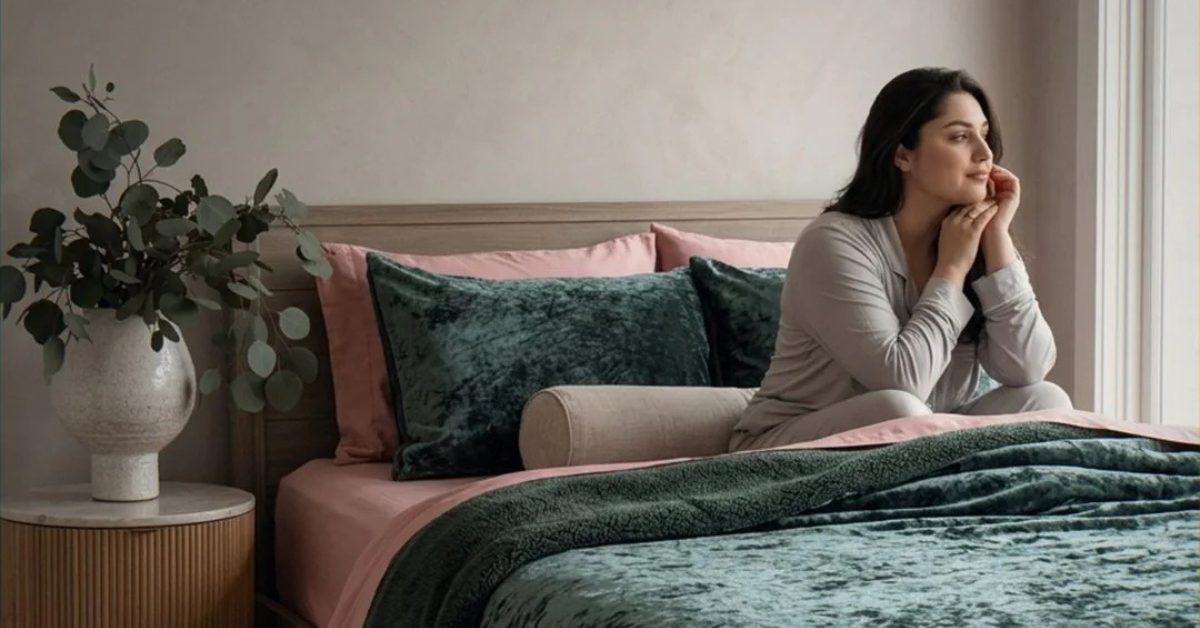
Quick Answer
A comforter is a thick, quilted bed covering that works as a complete all-in-one solution and no separate quilt cover required. The filling and the decorative outer fabric are permanently stitched together, so you just place it on the bed and sleep under it. Think of it as a traditional doona insert and quilt cover combined into a single product you can use straight away and wash in one go.
Comforters at a glance
Definition: A comforter is an all-in-one bed covering. The outer fabric and filling are permanently stitched together no quilt cover needed.
Key benefits: Ready to use immediately, washes in one piece, faster to make the bed, neat finished look without extra effort.
Who it suits: Busy households, people who hate changing quilt covers, pet owners, people over 50, and anyone wanting simpler bedding.
Key takeaway: Most people who switch from a traditional doona setup say the same thing they wish they'd done it sooner.
If you've come across the word comforter and wondered what it actually means, you're not alone.
In Australia, we grow up hearing doona, quilt, or quilt cover. The word comforter is less familiar, and that unfamiliarity can make people hesitant before they even understand what the product is.
The short version: a comforter is a thick, quilted blanket that replaces both your doona insert and your quilt cover in one go.
No cover to wrestle on. No insert shifting around inside. Just one product you throw on the bed, sleep under, and wash when it needs it.
This guide explains everything you need to known what a comforter is, how it compares to a doona, who it works best for, and the mistakes people make when shopping for winter bedding.

What We've Learned From Helping Australians Choose Bedding
After helping thousands of Australians find winter bedding, we've noticed something interesting. When we gegan selling comforters quite a few years ago most people who shopping with us were'nt actually looking for a comforter. They're looking for a way out of their current setup.
The complaints we hear most often have nothing to do with warmth:
- "I hate changing quilt covers."
- "The insert never stays in the corners."
- "I put off washing it because it's such a pain."
- "It takes two people to make the bed properly."
- "The bed never looks as tidy as it should."
What's interesting is that many of these customers start their search thinking they need a warmer doona or a better quilt. But when you ask them what's actually frustrating them, it's almost never the warmth.
It's the system and set up
A traditional doona setup involves a separate insert, a separate quilt cover, and the regular task of removing one, washing it, and reassembling everything usually while someone wrestles with corners on one end while you hold the other.
One customer described the moment it clicked for her:
"I didn't realise how much I hated dealing with quilt covers until I stopped using one."
We've heard versions of that sentence hundreds of times.
What customers discover with a comforter isn't just convenience. It's relief. The relief of removing a task from their week that they never consciously chose to hate, but had been tolerating for years.
The biggest insight we've gathered from years of selling bedding is this, most people aren't shopping for a product. They're shopping for a better nightly routine.

What Is a Comforter?
A comforter is a thick, quilted blanket filled with insulating material typically polyester microfibre, down, or a synthetic alternative with a decorative outer fabric that's designed to look good directly on the bed.
Unlike a doona or duvet, which is a plain white insert that requires a separate decorative cover, the comforter combines both layers into a single product.
The filling is stitched in place so it doesn't shift or bunch up. The outer fabric is the finished surface what you see on the bed is exactly what you sleep under.
The simplest way to explain it:
"It's a thick some what fluffy, quilted blanket that acts as your main top layer. You don't need to put a cover on it you just throw it straight onto the bed, sleep under it, and wash the whole thing when it gets dirty."
How Comforters Are Known Around the World
The term comforter is most common in the United States. In Australia, the same product is sometimes called a coverless quilt or coverless quilt set. In the United Kingdom, you may see it called a coverless duvet. In New Zealand, the terms comforter and coverless quilt are both used.
The product is the same regardless of the name. The concept is consistent: one complete bed covering that doesn't need a separate decorative cover.
Part of the hesitation Australian shoppers sometimes feel comes entirely from the unfamiliar name. Once they understand what a comforter is, the hesitation almost always disappears.

Comforter vs Doona: What's the Difference?
This is the question we get asked more than any other.
Here's a straightforward side-by-side.

Is a Comforter as Warm as a Doona?
This is one of the most common concerns, and the honest answer is: Well it depends.
Warmth comes down to the fill material, fill weight, and construction of the specific product not whether it's called a doona or a comforter.
What surprises many customers is that a comforter can actually feel warmer than a traditional doona setup, even with similar fill weights. Without a separate quilt cover creating a gap between layers, the bedding sits closer to the body and that closeness contributes significantly to the cosy feeling.
The Weight vs Warmth Confusion
One of the most common myths we hear is those that equate weight with warmth. Heavier doesn't automatically mean warmer.
Some older wool or heavy traditional doonas feel very bulky without necessarily trapping heat as well as modern bedding materials. Similarly, some lighter comforters can provide excellent insulation without weighing the bed down.
If you're particularly concerned about winter warmth, layering still works exactly the same way it does with a doona. Adding a set of winter sheets, a blanket, or a throw will boost warmth significantly without needing an excessively heavy base layer.
The feedback we hear from customers after switching is rarely: "I wish it was warmer."It's usually: "I didn't expect it to be this warm."
The BEST winter SLEEP
"The warmth without weight helped to provide a great sleep
each night. Snuggle fits my purpose for sleep." - James

What the Morgan & Reid Snuggle Fleece Comforter Feels Like
The Snuggle Fleece Comforter was made with one goal: to feel like your favourite winter blanket and your doona combined into a single product.
When customers take it out of the packaging for the first time, the most common reaction is: "It's softer than I expected."
Our Customers describe sleeping under it as:
- Soft and velvety
- Warm without feeling stiff or restrictive
- Cosy from the first night
- Similar to sleeping under a well-loved throw blanket
- Fluffy and enveloping without feeling heavy
Visually, the Snuggle Fleece creates a full, inviting look on the bed without any extra styling effort. The comforter itself becomes part of the room rather than something hidden inside a cover.
The range includes smooth fleece, crushed velvet fleece, checkered fleece, and seasonal colourways Deep Mahogany, Lavender, Sage, Black Velvet, Chalk Pink so customers choose not just based on warmth but on how they want the bedroom to feel.
What makes it different from many comforters on the market is that it was designed as genuine winter bedding first. Many other comforters sold are decorative lightweight products intended to sit on top of existing bedding. The Snuggle Fleece was built to replace the doona and quilt cover altogether.
As many of our customers put it: they bought it for the softness and stayed for the convenience.
Who Is a Comforter Best For?
After reading thousands of customer reviews and talking to customers directly, a clear pattern emerges. The people who love comforters most aren't necessarily looking for the best bedding available. They're looking for simpler bedding.
A Great Fit If You...
- Hate changing quilt covers this is the single strongest predictor of whether someone will love a comforter
- Wash bedding frequently (pets, allergies, kids) and want fewer steps involved
- Find it difficult to lift and manage heavy bedding due to back, shoulder, or mobility concerns
- Want your bedroom to look good without maintaining an elaborate setup
- Are setting up a new home and want a straightforward one-purchase solution
- Are a busy parent or professional who wants to simplify the to-do list
Probably Not the Right Fit If You...
- Genuinely enjoy swapping quilt cover styles frequently and building a regularly changing bedroom aesthetic
The biggest insight from our most loyal comforter customers is that they're rarely buying because they're passionate about bedding. They're buying because they're tired of thinking about bedding.
The strongest reviews often aren't about fabric or fill. They're comments like: "Making the bed takes half the time" and "I can't believe I didn't switch sooner."
Common Mistakes When Buying Bedding (And How to Avoid Them)
Solving the Wrong Problem
The most common mistake is searching for more warmth when the real issue is convenience. Many customers spend weeks comparing tog ratings and GSM weights when what they actually need is bedding that's easier to maintain.
Before you buy anything, ask yourself: is the problem that you're cold, or that your current setup frustrates you?
Thinking Heavier Means Better
Weight doesn't equal warmth. Some of the most effective bedding products are far lighter than traditional doonas but provide equal or better insulation. If you're choosing based on how heavy a product feels in your hands, you may be optimising for the wrong thing.
Ignoring Sizing
Many people buy to their mattress dimensions and end up with a comforter that doesn't have enough drape. Consider mattress depth, bed base height, and how much of the sides you want covered. When in doubt, sizing up is usually the better choice.
Shopping From Specifications Only
GSM, fill weight, and thread count all have their place. But they don't tell you how bedding will feel after six months of use, whether it'll survive regular washing, or whether you'll enjoy making your bed with it. Ask the practical questions too and read the reviews from places from Judgeme and Social media.
Assuming All Comforters Are the Same
The category ranges from lightweight decorative products to genuine winter-weight bedding. A comforter sold as a fashion accessory for a styled bed shoot is a very different product from a winter comforter designed to replace your doona. Know which category you're buying from.
Expert Recommendations for Choosing Winter Bedding
After years of helping Australians navigate bedding, here's the practical advice that actually makes a difference.
- Start with your lifestyle, not the product spec. Ask how often you wash your bedding, who shares the bed, whether you have pets, and whether you want the bed to look a certain way. The answers will guide you faster than a technical comparison.
- Consider your climate specifically. Customers in Sydney, Melbourne, Adelaide, regional NSW, Victoria, Tasmania, and New Zealand all have different winter requirements. What works in coastal Sydney may not be enough in a poorly insulated Canberra home.
- Don't underestimate sizing. If you have a deep mattress or a high bed base, check comforter dimensions carefully and consider sizing up for more coverage.
- Think about laundry day. If you find yourself putting off washing your bedding because it's difficult, choose something that makes the process easier. Regular washing is better for hygiene and better for the bedding itself.
- Warmth can be layered. A good winter comforter paired with warm sheets and a lightweight throw covers most Australian winter scenarios without needing an extremely heavy base product.
- Trust customer reviews for feel. Technical specifications can tell you fill weight, but reviews will tell you whether the product feels soft, whether the stitching holds after washing, and whether people actually enjoy using it.

Frequently Asked Questions
Is a comforter the same as a doona?
Not exactly. Both provide warmth as your main bed covering, but they work differently. A doona (also called a duvet) is a plain insert that requires a separate quilt cover. A comforter combines both layers permanently the outer decorative fabric and the filling are stitched together, so no cover is needed.
Do I need a quilt cover with a comforter?
No. That's the whole point. A comforter is designed to be used on its own. The outer fabric is already the finished, decorative surface. You put it on the bed and it's done.
Can I wash a comforter in my washing machine?
All Comforters at Morgan and Reid are machine weashable ,However ther are many comforters on the market that arent always check the care label for the specific product. The major convenience of a comforter over a traditional doona setup is that you wash the whole thing in one go rather than separating an insert and cover.
Is a comforter warm enough for Australian winters?
A winter-weight comforter provides warmth comparable to a traditional winter doona for most Australian conditions including Melbourne, Adelaide, regional Victoria, Tasmania, and New Zealand. Warmth depends on the specific product's construction and fill, not just the category name. For very cold sleepers or uninsulated homes, layering with warm sheets or a throw blanket is always an option.
What's the difference between a comforter and a quilt?
A quilt (or coverlet) is typically flat, lightly padded, and designed primarily for decoration or as a lightweight warm-weather layer. A comforter is thick, filled, and designed to be your main source of warmth. A quilt might sit over the top of your bedding during summer; a comforter replaces your bedding altogether.
Will a comforter make me sweat at night?
This depends on the specific comforter and your sleeping temperature. It's a common question, especially from menopausal women and naturally warm sleepers. If you run hot at night, look for comforters made with breathable materials and choose a weight suitable for the season rather than buying the heaviest option available.
Can a comforter replace a doona completely?
Yes — that's exactly what it's designed to do we are on the mission to ditch the doona. A winter-weight comforter serves as your primary top layer, replacing both the doona insert and the quilt cover in a single product.
What size comforter should I get?
Start with the size that matches your mattress, then consider sizing up if you have a deep mattress, a high bed base, or if you want more drape on the sides. Many customers find that going up one size gives them the coverage and the generous, fuller look they prefer.
Is a comforter good for people with back or shoulder problems?
It can be. One of the practical benefits is that there's no heavy insert to wrestle with when washing or making the bed. Customers with mobility concerns or who find managing bulky traditional doonas physically difficult often find a comforter significantly easier to use.
Why is it called a comforter and not a doona?
"Comforter" is the American English term for this type of bedding. In Australia, similar products have historically been called doonas or quilts. The word comforter has become more widely used in Australia as the coverless bedding category has grown. Some Australian brands also use the terms coverless quilt or coverless quilt set.
Is a comforter better than a doona?
It depends on what you value. If you regularly enjoy swapping quilt cover styles or you prefer a highly layered bedding setup, a traditional doona system may suit you better. If you want something easier to wash, faster to make the bed with, and simpler to maintain, a comforter is hard to beat. The honest question to ask yourself is: do I actually enjoy my current doona setup? If the answer is no, a comforter is worth trying.
Can I use a comforter in summer?
A winter-weight comforter is typically too warm for Australian summers. However, lighter-weight comforters designed for warmer months are available S well . Many customers use a winter comforter for the cooler months and switch to a lighter option or just sheets in summer. Some keep their comforter on the bed year-round and adjust the layers underneath.
How is a comforter different from a bedspread?
A bedspread is typically a thin, flat covering designed mainly for decorative purposes it drapes over the sides of the bed and is usually too light for winter warmth. A comforter is thick, filled, and designed as a functional sleeping layer, not just a styling piece.
If you're thinking about making the switch from a traditional doona setup Comforter range is worth looking at. It was made specifically to work as your complete top layer no quilt cover, no insert to manage, no wrestling with corners. The full range includes multiple textures, weights, and colourways for different bedrooms and different climates.
Available in sizes from single to super king, with options for standard beds and those who prefer to size up for more coverage.Customers who prefer something lighter for year-round use can also explore the lightweight comforter options in the collection.

Still on the Fence? Ask Yourself This One Question
We never try to convince someone that a comforter is for everyone.Instead we ask one thing: do you actually enjoy your current doona setup?
Not whether it’s warm enough. Not whether it’s expensive. Not whether it’s still usable.
Do you genuinely enjoy using it?
If you love changing quilt covers, enjoy swapping covers every few weeks, and your current setup does everything you need there’s no reason to switch.
But if you’re nodding along to any of these, a comforter starts making a lot of sense:
- You put off washing your doona because it’s annoying.
- The insert constantly shifts inside the cover.
- Making the bed feels like a chore.
- You’re tired of wrestling with corners.
- You want something simpler.
- You want your bed to look good with less effort.
What we’ve noticed is that customers often spend weeks comparing warmth ratings, fabrics, and specifications. Then they buy a comforter and tell us: “I should have done this years ago.” Not because it’s revolutionary. Because it’s easier.

At Morgan & Reid, we’re not trying to reinvent bedding. We’re trying to remove unnecessary steps. Your bed still needs to be warm. It still needs to be comfortable. It still needs to look good. The difference is that a comforter gets there with less effort.
Most of our loyal customers started out sceptical. Many had never heard the term comforter before. Many wondered whether it could really replace a traditional doona.
Those same customers are often the ones who come back and buy a second one for another bedroom, a guest room, their caravan, or as a gift. The real question isn’t: “Is a comforter better than a doona?”
The better question is: “Does my current bedding setup frustrate me more than it should?”
If the answer is yes, it’s worth trying something different.
After years of talking to Australians about bedding, the clearest thing we've learned is that most people don't actually dislike their doonas.
They dislike the work that comes with them.
The changing of quilt covers. The insert shifting around. The putting-off-washing-it-because-the-whole-process-is-annoying. The bed that never quite looks right.
A comforter doesn't solve every problem — it won't suit everyone, and if you genuinely love swapping covers and building a layered bedroom, a traditional doona setup may be the better choice.
But for the customers who are tired of bedding as a chore, the switch is almost always followed by the same reaction:
"I should have done this years ago."
Not because a comforter is revolutionary. Because it's easier.
The best bedding isn't always the most expensive or the most technical. It's the bedding that fits your routine so naturally that you stop thinking about it.
You make the bed.
You climb in.
You get comfortable.
That's exactly what bedding should do.
Share:
How One Bedding Change Helped Australian Women Simplify Winter Sleep