



Why Use a Coverlet in Spring? A Guide to Lighter Bedding
There’s usually a point in spring when your winter bedding starts to feel like too much. You push it off during the night, then reach for it again towards morning.
You might not need to change everything on the bed. A coverlet gives you a lighter layer to work with, whether you use it over your sheets or keep it within reach for cooler nights.
Here’s how to decide whether a coverlet suits your bedroom, what to put underneath it and how to choose the right fit.
Quick Answer: Is a Coverlet Good for Spring?
A coverlet can work well in spring when you want more coverage than a sheet without the bulk of heavier bedding. Use it over your sheets on mild nights, or combine it with another layer when temperatures drop.
-
Does it need a cover? No. A coverlet is a finished bedding layer.
-
Can it replace a doona? On nights when it provides enough warmth for you, yes.
-
What goes underneath? Usually a fitted sheet and, if you prefer, a flat sheet.
-
Will it keep you cool? That depends on its materials, construction, your room and how you sleep.
What Is a Coverlet?
A coverlet is a bed covering that generally has a flatter, less lofty feel than a filled comforter. Depending on the design, it may be woven, quilted or lightly padded.
It can be the layer you sleep under, an extra layer over other bedding or a finishing touch across the foot of the bed.
That flexibility makes it useful during spring. You can change how you use it as the nights warm up, rather than committing to the same bedding arrangement every night.
Explore the Morgan & Reid coverlet collection to compare different finishes and designs.
Three Ways to Use a Coverlet in Spring
1. Over Sheets on Mild Nights
If your winter bedding feels too warm but a sheet isn’t enough, try a coverlet as your main top layer.
Start with your fitted sheet, add a flat sheet if you use one, then spread the coverlet over the bed. Keep another layer nearby while you work out what feels comfortable.
There’s no need to pack away every warmer piece at the first sign of sunshine.
2. As an Extra Layer When the Temperature Drops
Spring nights don’t always follow the forecast you dressed for that morning.
Keep a coverlet folded at the foot of the bed so you can pull it up when you need more warmth. If your room still gets cold overnight, use it alongside your usual bedding rather than expecting a light layer to do every job.
3. To Change the Look Without Replacing Everything
A coverlet covers a large part of the bed, so its colour and texture can make a noticeable difference to the room.
If you like your existing sheets, work with them. Choose a pattern that picks up one of their colours, or a plain textured coverlet if you prefer a quieter look.
You can carry the colour through with European pillowcases, but you don’t need a pile of cushions to make the bed feel finished.
Coverlet vs Comforter vs Doona
The most useful distinction is how each piece works on the bed.
| Bedding | What it is | How you might use it in spring |
|---|---|---|
| Coverlet | Generally a flatter, lighter bed covering | Over sheets or as an adjustable extra layer |
| Comforter | Outer fabric and filling combined in one finished piece | As your main top layer, choosing a suitable warmth level |
| Doona and cover | A filled insert inside a removable cover | With an insert suited to your room temperature |
None of these names tells you exactly how warm the product will be. Check the materials and construction before comparing them.
If you’re considering a filled option without a separate cover, read our Australian guide to comforters.
How to Choose a Coverlet for Your Bed
Start With How You Sleep
Before choosing a colour, think about what you need the coverlet to do.
If you wake up warm under your current bedding, you may want a lighter main layer. If you’re comfortable overnight but want something for occasional chilly mornings, an extra layer at the foot of the bed may be enough.
Your bedroom temperature matters too. Choose for the room you sleep in, rather than assuming every Australian home needs the same spring bedding.
Check the Fabric and Any Filling
Read the full materials description, including the reverse and filling where applicable.
A soft surface, a lightweight feel and breathability are different qualities. You can’t reliably judge all three from a photograph or a fabric name alone.
Also check the care instructions before buying. A coverlet should fit your laundry routine as well as your bedroom.
Measure for the Coverage You Want
Coverlet size names can include combined sizes such as Queen/King, so compare the actual dimensions with your mattress.
Measure your mattress width, length and depth, including any topper. Then decide how far down the sides you want the coverlet to fall.
For an approximate side drop, subtract the mattress width from the coverlet width and divide by two. The way the fabric sits, including its texture and thickness, will affect the finished appearance.
Our coverlet size guide is a useful starting point. Confirm the measurements on your chosen product page before ordering.
How to Style a Spring Bed With a Coverlet
Start with the bedding you already enjoy using.
For a patterned coverlet, choose one colour from the design and repeat it in your sheets or pillowcases. This helps the bed feel connected without matching every piece.
For a plain coverlet, let texture provide the interest. A crinkled surface or stitched detail can give the bed depth while keeping the colours simple.
Try making the bed in two ways:
-
Spread the coverlet across the whole bed for a finished look.
-
Fold it back to reveal your sheets and create an easy place to turn it down at night.
Browse our sheet sets if you’re looking for a base colour to work with.
Is It Time to Swap Your Winter Bedding?
You don’t need to change your bedding just because the calendar says spring. But if you’re pushing your doona off during the night, then pulling it back up because a sheet feels too light, it might be time to try something in between.
A coverlet is worth considering if:
-
Your winter bedding feels too warm, but you still like sleeping under a layer.
-
You prefer a flatter bed covering with less bulk.
-
Your bedroom is comfortable at bedtime but cooler towards morning.
-
You want to freshen up the room without replacing your sheets and pillows.
Start by changing the top layer. Try your coverlet over sheets and keep warmer bedding nearby while you work out what feels comfortable in your room.
Which Coverlet Style Suits Your Bedroom?
Once you’ve checked the materials, size and care instructions, think about what you want to see when you walk into the room. Texture, florals and stripes each bring something different to the bed.
Crinkle White: When You Want Texture and a Simple Colour Palette
A white coverlet gives you plenty of freedom with the bedding underneath. You can keep everything tonal or turn back the top edge to reveal coloured sheets.
The Crinkle Box Stitch Coverlet adds interest through its crinkled surface and oversized stitched boxes. It’s an option if you enjoy a simple colour palette but still want visible texture across the bed.
Try it with white sheets for a quiet, layered look, or introduce a colour through your pillowcases.

Floral: When You Want the Bed to Bring Colour Into the Room
A floral coverlet can give a plain bedroom a focal point without needing to add much else.
Look closely at the scale of the print. A small floral creates a different effect from a larger botanical design, especially once it’s spread across the whole bed.
For an easy pairing, choose one colour from the pattern and repeat it in your sheets or pillowcases. If you’d rather keep the rest simple, use white sheets and let the coverlet carry the colour.

Stripe: When You Want Pattern That’s Easy to Work With
Stripes can be a comfortable starting point if you usually buy plain bedding. They bring pattern to the room while leaving you plenty of options for sheets and accessories.
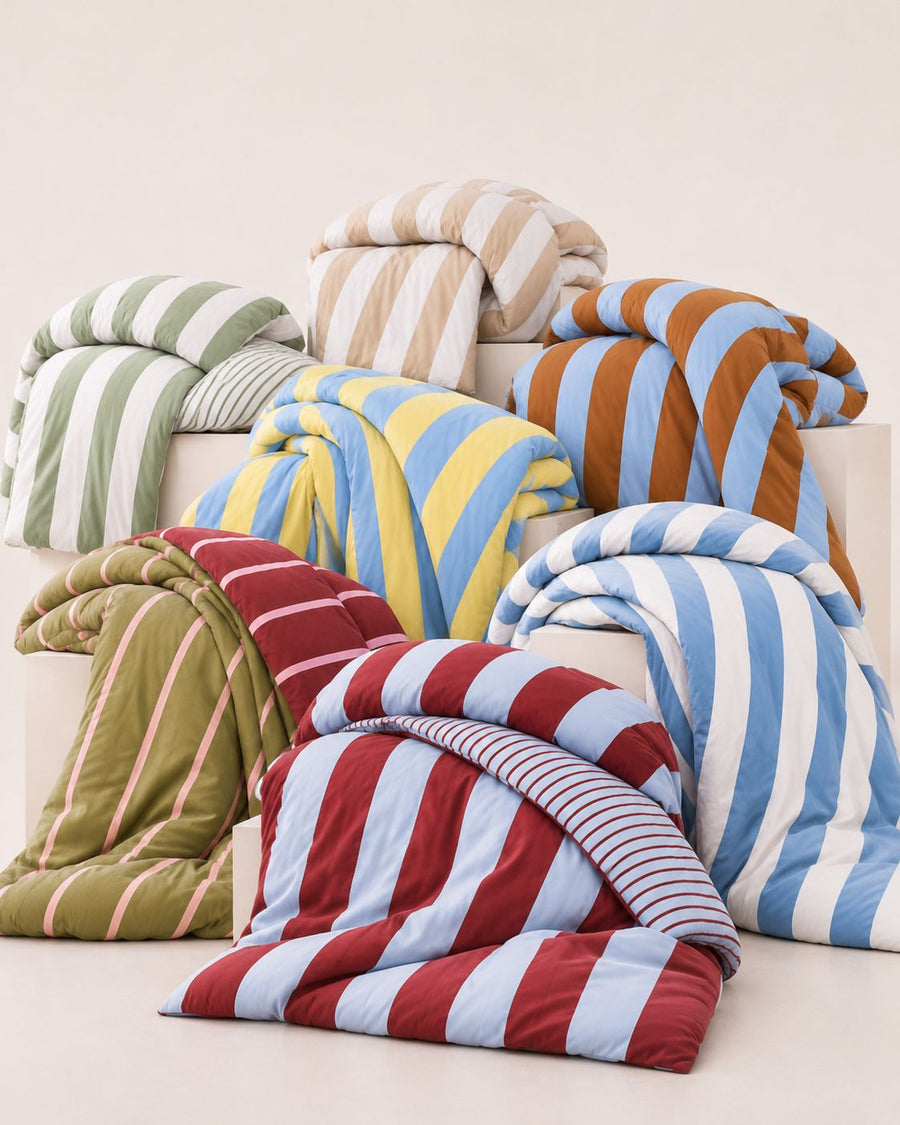
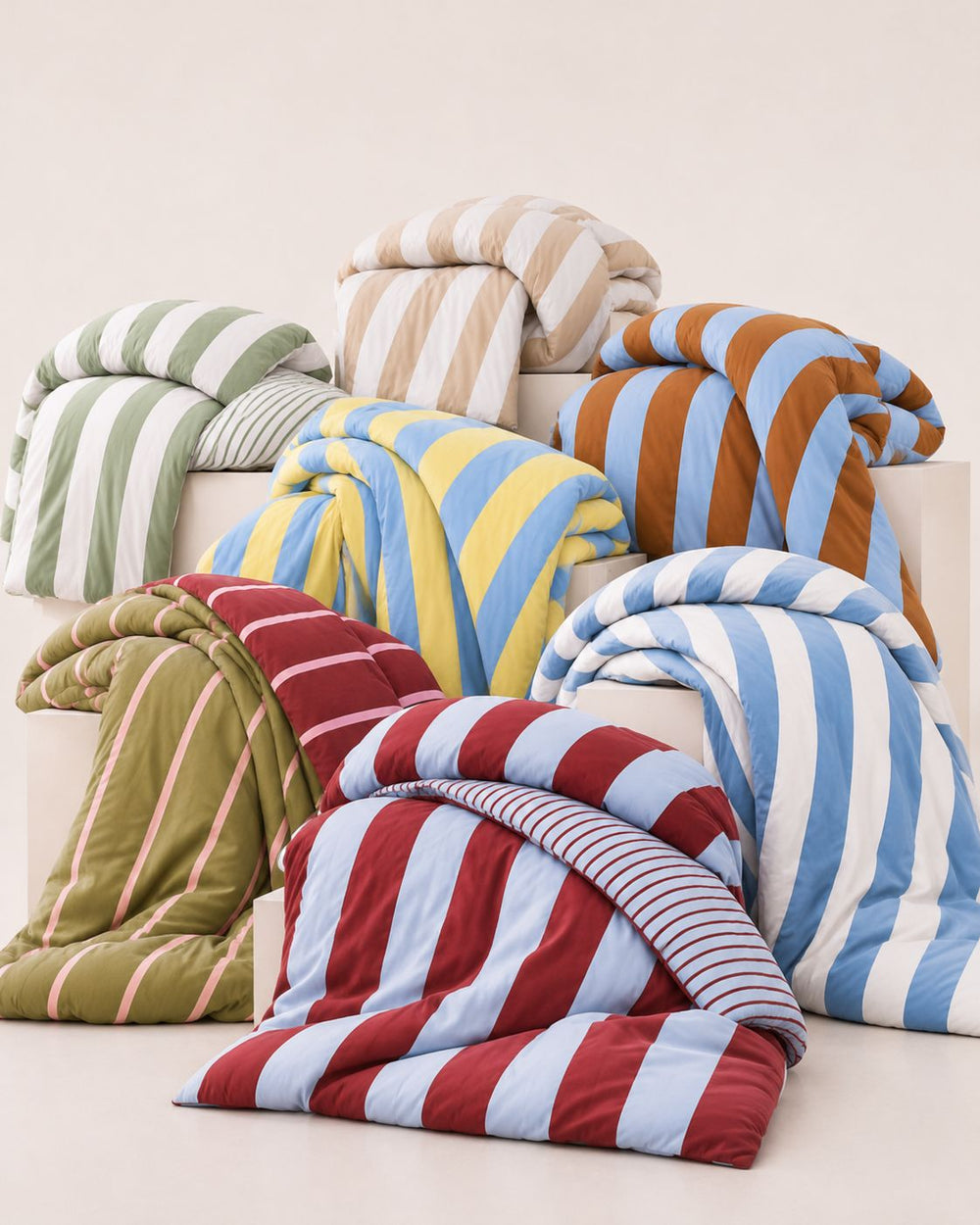
Pair a striped coverlet with plain sheets, then repeat one of its colours in the pillows. Check the full-bed photographs to see the stripe direction and spacing, as both affect the finished look.
Explore our coverlet collection to compare the designs, then check each product page for its materials, measurements and inclusions.

One Coverlet, Three Ways to Make the Bed
A coverlet doesn’t need to stay in the same arrangement all season. You can move it around as the temperature changes or depending on how you want the bed to look.
1. As Your Main Layer Over Sheets
On a mild night, make the bed with your fitted sheet, add a flat sheet if you use one, and spread the coverlet over the top.
Fold the top edge back if you want to show your sheets. This is also an easy way to bring another colour into the bed without adding extra accessories.
Choose sheets that feel comfortable against your skin and keep another layer nearby if the room tends to cool overnight.
2. Folded at the Foot of the Bed
If you’re still using a comforter or doona, fold the coverlet across the foot of the bed.
It adds a different texture or pattern during the day and stays within reach if you need another layer at night. It’s a useful arrangement during those weeks when the weather hasn’t quite made up its mind.
3. Spread Over Warmer Bedding
You can also spread a coverlet over a comforter or doona to change the appearance of the bed.
This lets you enjoy the coverlet’s design while keeping warmer bedding underneath. Both layers contribute warmth and weight, so turn one down or remove it if the combination feels like too much.
If you’re unsure which main layer suits you, our guide to comforters explains how they work.

Will a Queen/King Coverlet Fit Both Bed Sizes?
A coverlet labelled Queen/King is intended to suit both sizes, but it won’t hang the same way on each bed.
With the same coverlet, a narrower Queen mattress leaves more fabric to fall over the sides. A wider King mattress uses more of that fabric across the top, leaving less overhang.
Mattress depth matters too. A thick mattress or added topper can make the coverlet appear shorter at the sides.
Before ordering, compare the coverlet’s width and length with your mattress measurements. To estimate the drop on each side, subtract your mattress width from the coverlet width, then divide by two.
For example, a 260 cm wide coverlet centred on a 153 cm wide Queen mattress has approximately 53.5 cm available on each side. On a 183 cm wide King mattress, that becomes approximately 38.5 cm per side. The finished drape will depend on how the fabric sits.
Use our coverlet size guide as a starting point, then confirm the measurements on your chosen product page.
Jess’s Tip: Change One Layer First
You don’t need to pack away all your winter bedding as soon as spring arrives. Try a coverlet over your sheets and keep your warmer bedding nearby for the first few nights. You’ll get a better idea of what works in your room before changing the rest of the bed.
Washing and Storing Your Coverlet
Follow the care label on your particular coverlet. Don’t assume that every design can use the same wash cycle or drying method.
If machine washing is permitted, check that the coverlet has enough room to move in the drum. Larger sizes can be bulky even when they feel light on the bed.
Make sure it is completely dry before folding it away. Store it somewhere clean and dry, and avoid packing bedding away while it still feels damp.

Frequently Asked Questions About Spring Coverlets
Can I Sleep Under a Coverlet Without a Doona?
Yes. You can use a coverlet over your sheets without a doona if it provides enough warmth for you. Keep an additional layer nearby if your bedroom cools down overnight.
Does a Coverlet Need an Insert or Quilt Cover?
No. A coverlet is a finished piece of bedding. You don’t need to put an insert inside it or add a separate quilt cover.
Is a Coverlet Suitable for Hot Sleepers?
A lighter coverlet may suit someone who finds their current bedding too warm. However, comfort depends on the particular product, your room temperature and the other layers on your bed. A coverlet isn’t a guarantee that you won’t feel hot.
Can I Use a Coverlet Over a Comforter?
Yes. You can spread it over a comforter or fold it across the foot of the bed. Both layers contribute warmth, so remove one if the combination feels too hot or heavy.
Should I Buy a Larger Coverlet Than My Bed Size?
Only if the measurements give you the coverage you want. A larger size can provide more drape on a deep mattress, but check that it won’t trail on the floor or be awkward to handle.
What Comes in a Coverlet Set?
Inclusions vary by product. Check the “What’s Included” section for the coverlet size, pillowcase quantity and any other supplied pieces. Sheets and decorative cushions shown in photographs may be sold separately.
A Lighter Bed, When You’re Ready for It
You don’t have to change your whole bedroom for spring. Start with the layer that’s no longer working for you.
A coverlet gives you options: sleep under it, add it when the night cools down or use it to bring a different colour and texture to the bed.
Explore our coverlets and coverlet sets to find a design that suits your home.
About the Author
Jess | Marketing Manager at Morgan & Reid
Jess has worked in the bedding industry for a decade and is the Marketing Manager at Morgan & Reid. Her work reflects the brand’s mission to help Australians create warmer, more comfortable homes. Through practical advice on bedding, sizing and styling, she helps readers create a bed they look forward to coming home to.
Last Updated October 2026
Product Information and Further Reading
Always check the individual product page and care label for materials, measurements, set inclusions and cleaning instructions.
Share:
The Ultimate Guide to Super King Bedding in Australia